

The Affordability Reset
After 2020, American wages have to catch up to prices, housing costs, debt service, insurance, and the cost of forming a household.
Law firm artificial intelligence spending now reaches research, drafting, review, billing, and supervision. Lawyers must still verify, price, sign, and defend the work.
Texas regulates hunting access and fishing guides in different ways. This Article asks whether paid hunting guides operating on land they do not own need a narrow accountability rule grounded in lawful access, private authority, and wildlife enforcement.
Russia’s war in Ukraine shows how a campaign can be strategically wasteful while still rewarding the offices, contractors, commanders, and networks that administer it.
After Bruen, the question is whether a State may treat every silent proprietor as having already barred licensed carry on private property held open to the public.
Fairness often sounds like a conclusion, but it usually hides a choice about priority. After a hurricane, that choice becomes visible: who receives help first, who waits, and which principle governs the sequence.
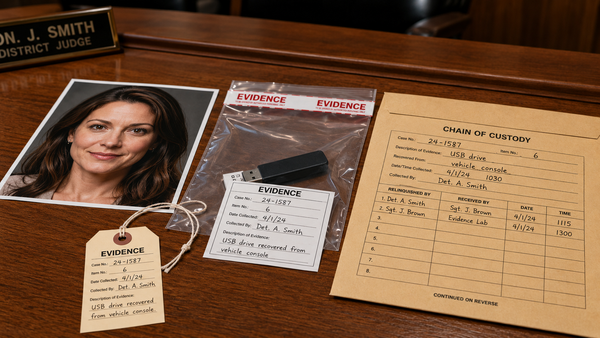
Generative AI has weakened the old evidentiary force of audio, video, and photographs. This Article argues that courts should answer concrete deepfake challenges through claim-specific process proof under Rule 901.
AI data centers show where artificial intelligence becomes legal infrastructure, raising questions about power, land, water, financing, permitting, tax incentives, and public governance.
Recent Supreme Court decisions have weakened agency discretion, but the displaced power may strengthen presidential control over administration, enforcement, and regulatory strategy.